Wageningen, The Netherlands
July 23, 2025
Plant roots grow longer when the soil is not only slightly warmer but also a little drier. Researchers at Wageningen University & Research (WUR) have discovered how these two environmental factors reinforce each other, resulting in up to 30% faster growth of primary roots. The findings have been published in the scientific journal Current Biology.
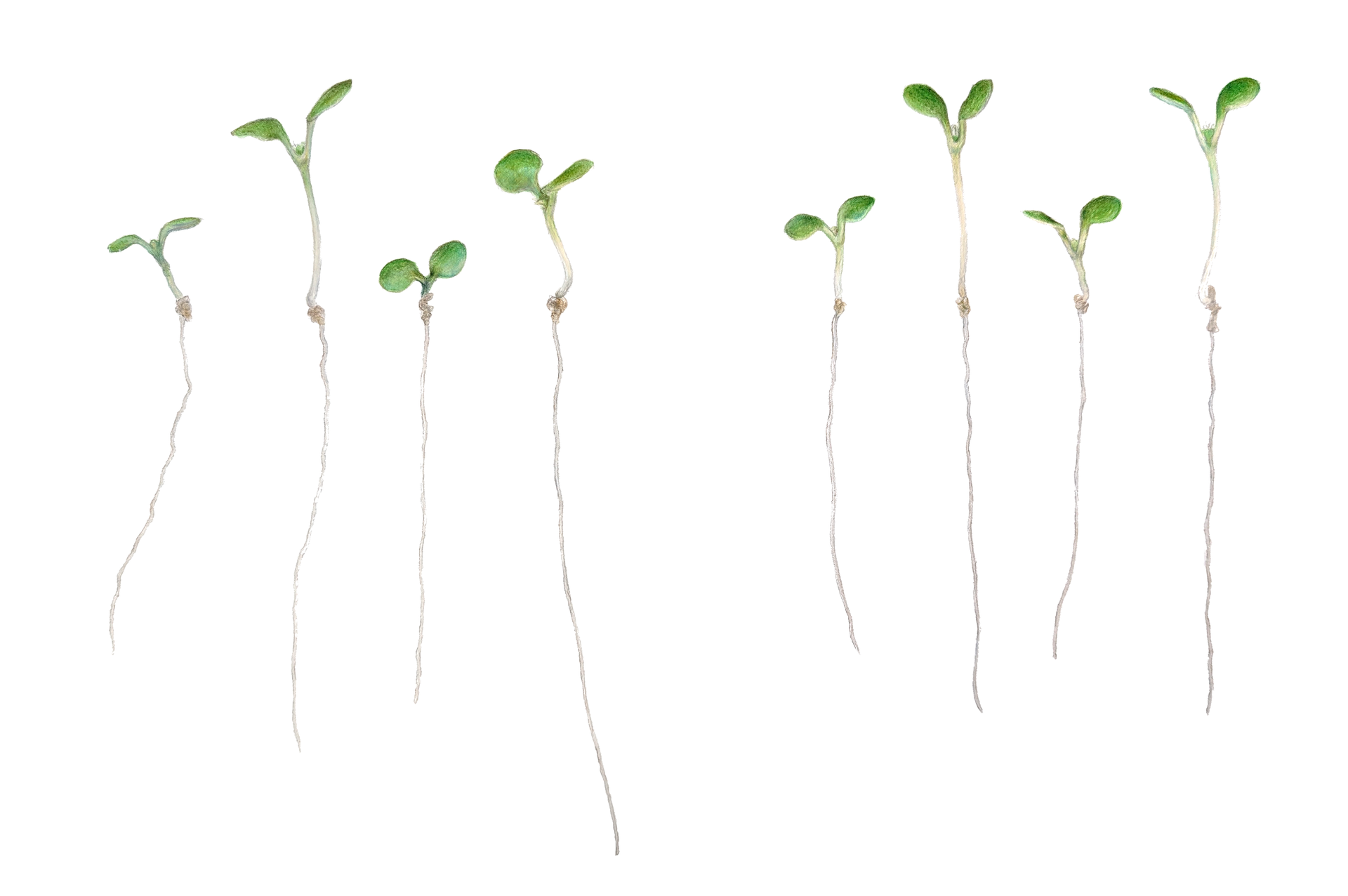
Plant roots grow longer when the soil is not only slightly warmer but also a little drier (illustration: Elizabeth van Veen)
Synergy between heat and drought
In soil-based growth experiments, the roots of the model plant Arabidopsis thaliana (thale cress) were exposed to a temperature of 28 °C instead of the standard 20 °C. The plants also received slightly less water, inducing mild drought stress. This combination led to a significant increase in root length, showing that soil temperature and moisture reinforce each other in promoting root growth.
Thermomorphogenesis - the growth response to heat - has been extensively studied in stems and leaves. However, much less was known about how plant roots respond to changes in soil temperature and moisture. This study shows that roots use an independent signalling network to actively adapt their growth to the soil environment.
Benefits of longer roots
Longer roots help plants absorb water and nutrients more efficiently, especially under stressful conditions such as heat and drought. By growing deeper into the soil, plants can reach moister layers, improving their chances of survival when the upper soil dries out.
The researchers identified three key proteins that regulate this combined effect:
2 and SnRK2.3
These kinases are essential for the enhanced root growth under combined heat and drought stress. Without them, the additional growth effect does not occur.
COP1
This protein suppresses the enhanced root growth response in the absence of drought stress.
HY5 in trichoblasts
The transcription factor HY5 regulates which genes are activated or repressed in the root hair cells (trichoblasts). SnRK2.2/2.3 promote HY5 stability, while COP1 reduces it. The more stable HY5 is, the stronger the root elongation response.
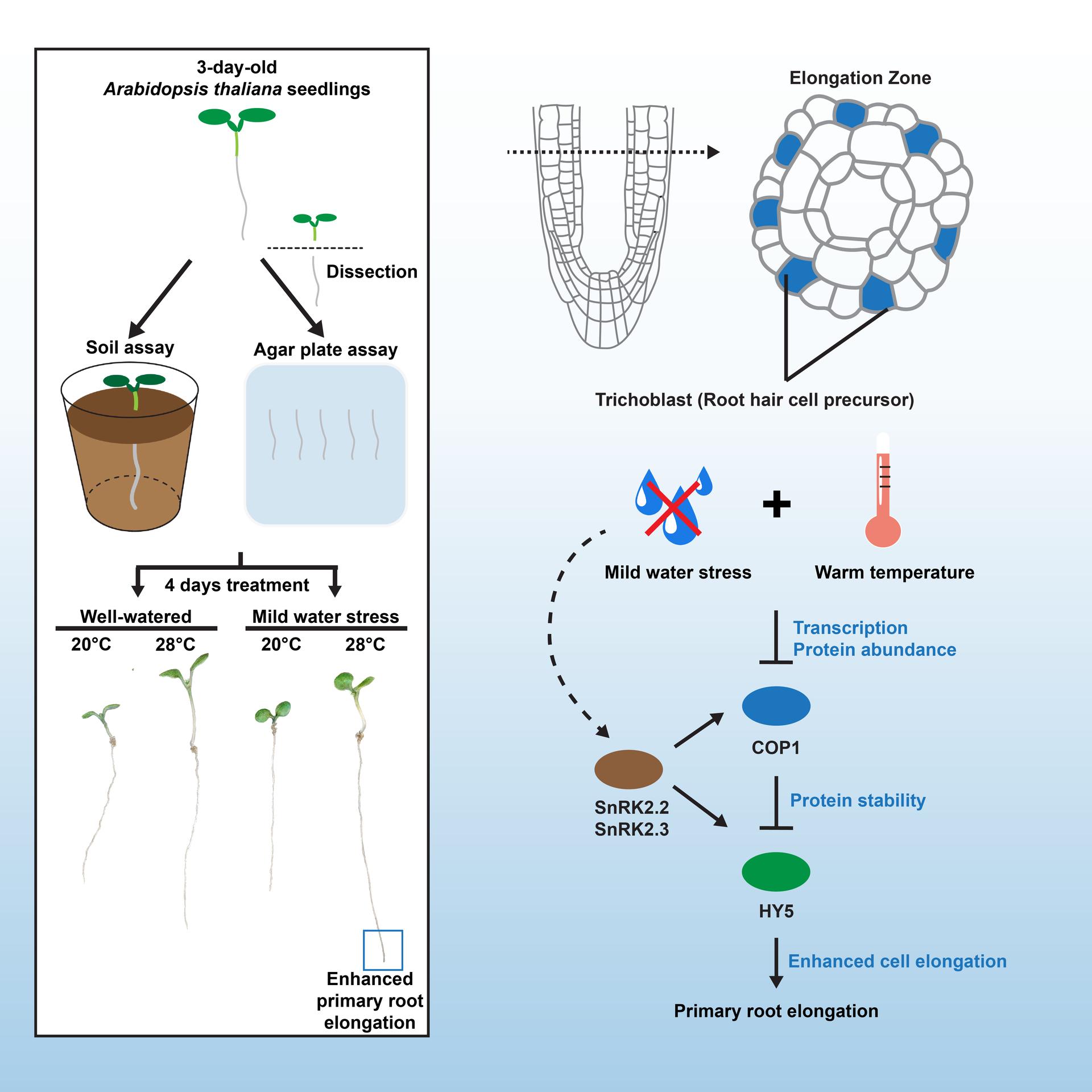
Synergy between heat (28 °C) and mild drought stress promotes root growth in Arabidopsis via the kinases SnRK2.2/2.3, the E3 ligase COP1 and the transcription factor HY5 (illustration: WUR; Hayes, Leong et al., Current Biology, CC-BY Open Access publication)
Valuable insights for breeders
Climate change is causing greater fluctuations in soil temperature and increasingly erratic rainfall patterns, making growing conditions less predictable. This study reveals which molecules regulate root growth under heat and mild drought. Breeders can use this knowledge to develop crop varieties with stronger, more resilient roots. Farmers, too, can use these insights to better align their cultivation systems with changing soil conditions. According to the researchers, this could help stabilise crop yields and improve water efficiency.
WUR continues its research into climate-resilient crops, including within the Dutch growth fund programme CropXR.
Read the scientific publication in Open Biology.




 Topics
 Species