13 February 2026
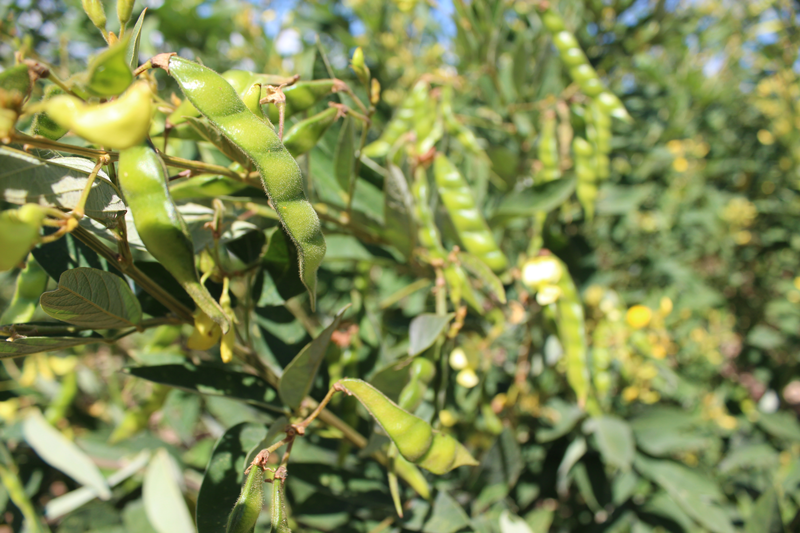 Soybean seed in the field. (Photo credit: Ana Couvinhas).
In a major development following years of research efforts and collaborating with national systems and partners in Mozambique, IITA–CGIAR, in partnership with the Agricultural Research Institute of Mozambique (IIAM) and the Soybean Innovation Lab, released five climate-resilient soybean varieties in Mozambique in December 2025.
The new varieties, named Bela, Malonda, Ovilela, Ulimi, and 10E, were tested in four provinces in the central and northern regions of the country, namely Niassa, Manica, Tete, and Zambézia, where soybean production predominates for four seasons.
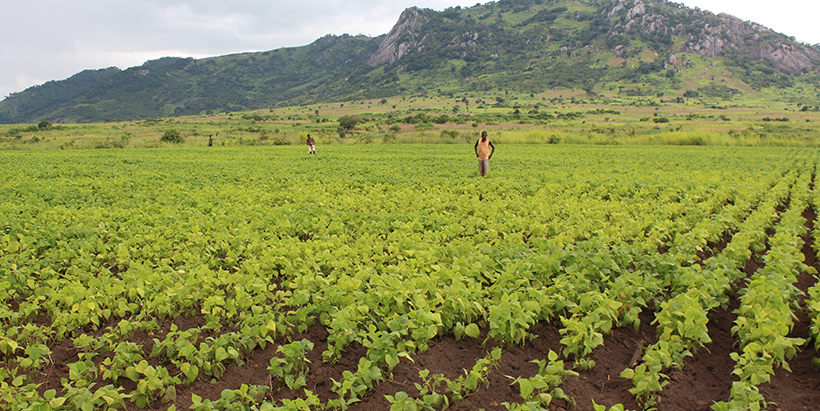 Soybean plantation field in Mozambique. (Photo credit: Ana Couvinhas).
According to the IITA Mozambique Country Representative, Dr Steve Boahen, the research initiative stemmed from the need to replace existing old varieties, which are vulnerable to diseases such as soybean rust. The new varieties are more drought- and disease-resistant, have higher protein and oil contents, and yield 3.1–4.3 tons/ha, whereas the old varieties yield up to 2.8 tons/ha. They also have larger seed sizes, which are attractive to some farmers.
“These varieties also have short maturity duration, allowing for better adaptation to climate change since the rainy seasons have become shorter than usual. They provide options for farmers who plant late due to the late onset of rains or for other reasons, since they are early-maturing and can fit within the shortened season. With this innovation, producers can choose early, medium, or late duration soybean to optimize farm productivity,” said Dr Boahen.
As next steps, IITA-CGIAR will work with the country’s government agencies and partners to begin disseminating the varieties by producing basic seed for seed companies and community-based seed producers, who will then multiply and distribute certified seed to soybean producers.
By facilitating access to improved-quality seed adapted to climate change for producers in Mozambique; while simultaneously transferring enhanced knowledge of agricultural production techniques, IITA-CGIAR thus strengthens its role in improving productivity, income generation, and food security.
“We are here to support IIAM and the agriculture sector. We are here to improve productivity for producers and improve food security and income. And if we want that to happen, the first step is to improve the varieties and seeds, and then improve agricultural practices, the best way to produce the crops,” added Dr Boahen.
The soybean breeding team in IITA Zambia, provided 40 soybean lines to the Mozambique team, from which five were selected after the requisite trials for release.
IITA-CGIAR, in partnership with IIAM, has played a crucial role in the research, development, release, and dissemination of seed varieties such as soybean, cowpea, and sesame, which form an important basis for agricultural production in the country.
In 2011, IITA and IIAM released 5 soybean varieties, the first batch of soybean varieties ever released in the country.
Soybeans in Mozambique are an important agricultural product because they provide a good source of income for smallholder farmers. Due to its high nutritional value, it is used for food, animal feed (mainly poultry), and as an industrial raw material.
This milestone marks a major step in translating years of dedicated research into real impact for farmers. These improved, climate-resilient soybean varieties reaching farmers’ fields, will enhance productivity, strengthen resilience, and create new opportunities for income generation.
The research efforts and collaboration between the IITA Mozambique and IITA Zambia, and partners demonstrates the importance of teamwork, commitment, and partnership in delivering innovations that transform agriculture and livelihoods across Mozambique and the region.




 Topics
 Species