Nigeria
29 January 2026
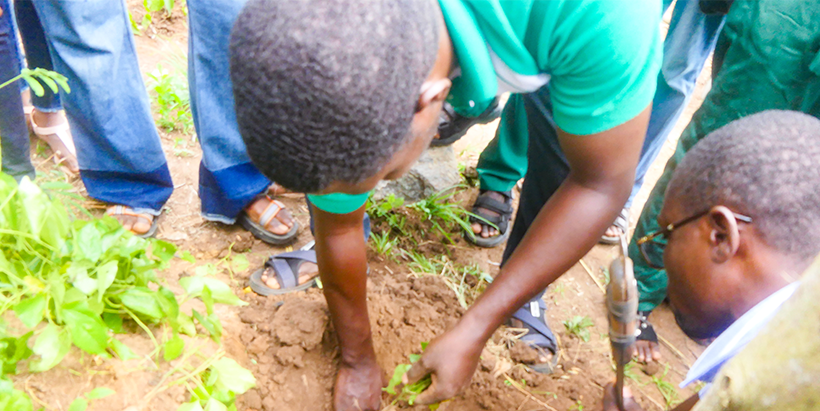 Seed yam demonstration plot at LASUSTECH.
The biggest problem facing food production in Africa often starts long before planting. Many farmers unknowingly plant weak, infected, or poorly multiplied materials, especially root and tuber crops, such as yams, cassava, and potatoes. Once the foundation is weak, no amount of rainfall or fertilizer can deliver good harvests.
Semi-Autotrophic Hydroponics (SAH) is a new approach that solves this hidden problem. Instead of raising young plants in soil, SAH uses clean, soil-free materials such as carbonized rice husk or perlite inside semi-closed containers. This system gives plantlets with controlled nutrients and moisture while protecting them from pests, diseases, and harsh weather conditions.
The result is faster multiplication of clean and uniform planting materials. With SAH, seed producers can generate large quantities of high-quality yam, cassava, and potato planting materials in less time, at lower cost, and with fewer losses than traditional field nurseries.
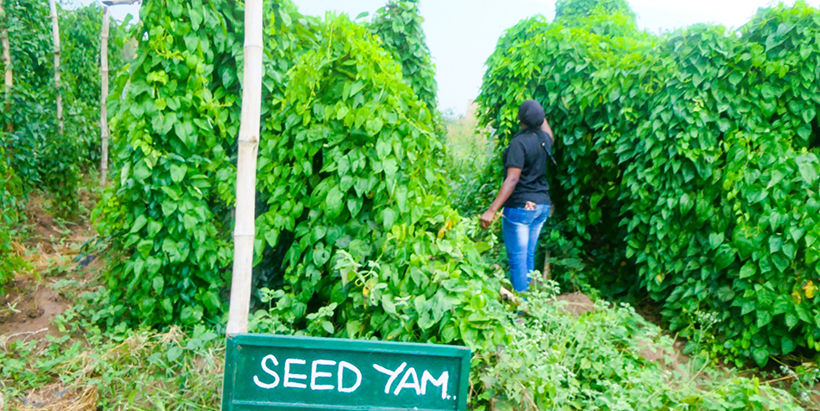 Seed yam being harvested at LASUSTECH.
In Nigeria, this technology is already moving from theory to practice through a collaboration between the International Institute of Tropical Agriculture (IITA–GOSEED) and the Lagos State University of Science and Technology (LASUSTECH). The project introduced mini-tubers, vine cuttings, and seed yam production systems to demonstrate how SAH-supported planting materials perform in real field conditions.
According to Julius Taiwo of IITA-GOSEED, the goal is to turn the university into a functional seed hub serving Lagos, Ogun, and surrounding states. He said the demonstrations were established to raise awareness on innovation in seed yam production and to prepare students to become certified seed entrepreneurs capable of running their own seed businesses.
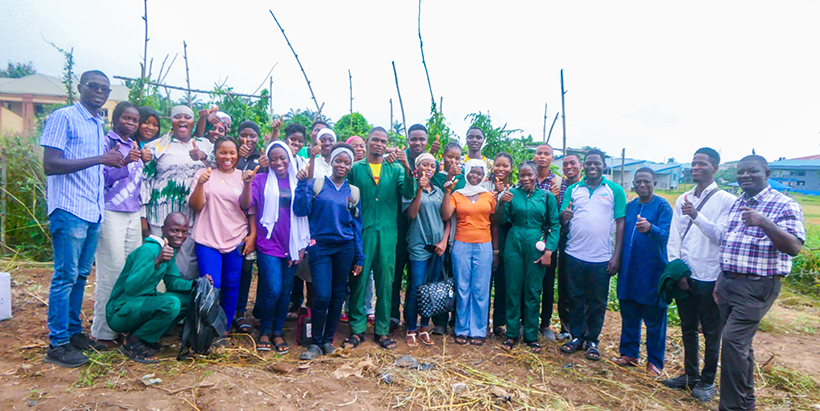 IITA-Goseed representative, lecturers and participating students at LASUSTECH.
Field trials and test harvests have already produced strong results. Dr Gabriel A.S. Benson, Acting Head of the Department of Crop Science at LASUSTECH, said vine cuttings performed as expected, and mini-tubers produced tubers weighing over 200 grams. He confirmed that the university management, including the Vice-Chancellor, has expressed interest in scaling the project.
Beyond production, the project is changing how students learn agriculture. Assistant Lecturer Akeem Oluwasegun, who facilitated the initiative, said that students moved from classroom theory to real hands-on skills, learning seed multiplication, nursery management, and basic agribusiness planning. He added that the university is ready to function as a seed hub and has management support to sustain the initiative.
Students who participated in the project say their understanding of seed production has changed. Final year student Ogandje Blessing said the work helped her understand what mini tubers are and how they reduce space, cost, and seed scarcity. David Sejero, another student, said he was surprised by how vine cuttings could produce healthy seedlings using small land areas and encouraged farmers to adopt the method for more sustainable production.
As climate change, pests, and declining soil quality make traditional nurseries riskier, SAH provides a controlled, climate-smart alternative for producing clean planting materials. By improving the quality of what farmers plant, the technology is helping to enhance yields, strengthen seed systems, and create new business opportunities for young people and women in agriculture.
Rather than treating symptoms like low yield, SAH tackles the root of the problem, the quality of the planting material itself. Moreover, for many farmers, that difference could determine whether the season ends in loss or in harvest.




 Topics
 Species